Sunday, August 27, 2023

New Titles


1) Wolf, Heather. Find More Birds: 111 Surprising Ways to Spot Birds Wherever You Are. 2023. The Experiment. Paperback: 268 pages. Price: $

PUBLISHER’S SUMMARY: A gorgeously photographed trove of 111 ingenious tips for seeing more birds wherever you are—from crowd favorites (hummingbirds, owls, eagles) to species you’ve never spotted before.

      Seeing more birds than you ever imagined and witnessing exciting avian drama is possible—whether you’re on the go or in your own neighborhood, local park, or backyard. As Heather Wolf explains, it all comes down to how you tune in to the show happening around you, the one in which birds—highly skilled at staying under the radar—are the stars. In 
Find More Birds, Heather shares her very best tactics—and the jaw-dropping photographs they helped her capture.

  • Look for birds at their favorite “restaurants”— from leaf litter to berry bushes, and ball fields to small patches of mud.
  • Watch for “tree bark” that moves . . . you may find it has feathers.
  • Try simply sitting on the ground for a revealing new perspective.

      Plus, special tips point the way to crowd favorites such as hummingbirds, owls, and eagles—and can’t-miss bird behaviors. As your senses sharpen and “noticing” becomes second nature, Find More Birds will turn your daily routines into bird-finding adventures, too. Whether you’re strolling down the block or parking your car, you never know what will surprise you next! 

RECOMMENDATION: Best for beginning or intermediate birders. 


2) Grimaldi, David A. (editor). The Complete Insect: Anatomy, Physiology, Evolution, and Ecology. 2023. Princeton University Press. Hardbound: 368 pages. Price: $35.00 U.S.

PUBLISHER’S SUMMARY: With an astounding 3.5 million species occupying virtually every habitat on Earth, insects are one of the most diverse groups of animals on the planet, from the humble bee to the agile praying mantis. Taking you inside the extraordinary world of insects, The Complete Insect explores all aspects of the natural history of these remarkable creatures, providing a close-up look at their fascinating anatomy, physiology, evolution, ecology, behavior, and more. It features hundreds of stunning color photographs and illustrations and draws on a broad range of examples, from familiar ants to iridescent jewel beetles. A celebration of the rich complexity of insect life, The Complete Insect is a must-have book for insect enthusiasts and armchair naturalists.

  • An absorbing, wide-ranging, and beautiful exploration of the fascinating natural history of insects
  • Features a wealth of stunning full-color photographs from the field
  • Includes photomicrographs and electron micrographs that offer a rare view of normally invisible structures
  • Examines the complex relationship between humans and insects
  • Integrates physiological adaptations with ecology and behavior

 RECOMMENDATION: A well illustrated introduction to the insects!


3) Penny, Nick. Call of the Kingfisher: Bright Sights and Birdsong in a Year by the River. 2023. Bradt. Paperback: 236 pages. Price: $16.99 U.S.

PUBLISHER’S SUMMARY: Call of the Kingfisher is the enchanting debut from composer and wildlife recordist, Nick Penny. This love letter to a short stretch of Northamptonshire’s River Nene celebrates all the wild things that live there, especially the kingfishers. Uniquely, it comes with bonus audio content to complement the text, accessed via QR codes.

     For four decades, Penny has walked beside the river at Oundle – a lovely but little-known part of England where where Clark Gable and thousands of American airmen were stationed during World War II, and where bandleader Glenn Miller performed his final airfield concert before going missing in action. For a whole year, Penny gave the waterway all the time it asked for. The more attention he gave, the more he saw the kingfishers and heard their high whistling calls.

     Call of the Kingfisher relates a year by the river, the author’s experiences there and the people he meets. Other strands weave around the feathered protagonist: explorations of history and landscape, from Roman and Bronze Age sites to watermills and centuries-old stone churches; homages to naturalists who lived nearby; forest dawns and dusks listening to the precious song of nightingales. But the background tapestry is the riverbank’s sights and sounds, and its greens and browns, shot through with the blue and orange threads of a kingfisher’s glowing feathers.

     As a composer and wildlife recordist, Penny has a deep interest in sounds in the natural environment. He uses the local landscape and wildlife sounds as inspiration, and brings fresh insights into countryside sounds. The book includes access to an hour of high-quality birdsong recordings made alongside the River Nene – audio soundbites of nature’s riches, from kingfishers and nightingales to owls and cuckoos.

     This is a book about the things that can be seen and heard when we approach nature with patience and curiosity. It celebrates people who have used that focus to help preserve wildlife and pass on their knowledge to future generations. Above all, Call of the Kingfisher serves as a call to appreciate what we’ve got, wherever we are, and to use our ears as much as our eyes when we experience the natural world. 


RECOMMENDATION: To me this book seems like a modern version of  Gilbert White's The Natural History of Selborne.


4) Cagle, Nicolette. Saving Snakes: Snakes and the Evolution of a Field Naturalist. 2023. University of Virginia Press. Paperback: 210 pages. Price: $27.95 U.S.

PUBLISHER’S SUMMARY: Snake populations are declining around the globe, but calls for their conservation are muted by fear and prejudice. Saving Snakes offers a new approach to understanding snakes-one built on respect. From Cuba and Nicaragua to Costa Rica and Australia, Nicolette Cagle has traveled the world in search of snakes. She also has spent decades conducting natural science research on snake activity, specifically in regions of the U.S. where urban development encroaches upon their habitat.

     Beautifully written, Saving Snakes entwines Cagle's personal narrative with deep scientific and historical research. By tracing the author's evolution as a field naturalist, it provides a blueprint for developing a conservation consciousness among young people and paves the way for increased inclusivity in the male-dominated field of herpetology. Fundamentally a book about snakes, this is also the story of one woman's pursuit of her passion as she searches for, studies, and advocates for these enigmatic creatures.

RECOMMENDATION: A must read for anyone with an interest in snake biology and/or conservation!


5) Alcalá, Kathleen. The Deepest Roots: Finding Food and Community on a Pacific Northwest Island. 2016 (2019). University of Washington Press. Paperback: 344 pages. Price: $24.95 U.S.

PUBLISHER’S SUMMARY: As friends began "going back to the land" at the same time that a health issue emerged, Kathleen Alcalá set out to reexamine her relationship with food at the most local level. Remembering her parents, Mexican immigrants who grew up during the Depression, and the memory of planting, growing, and harvesting fresh food with them as a child, she decided to explore the history of the Pacific Northwest island she calls home.

     In
The Deepest Roots, Alcalá walks, wades, picks, pokes, digs, cooks, and cans, getting to know her neighbors on a much deeper level. Wanting to better understand how we once fed ourselves, and acknowledging that there may be a future in which we could need to do so again, she meets those who experienced the Japanese American internment during World War II, and learns the unique histories of the blended Filipino and Native American community, the fishing practices of the descendants of Croatian immigrants, and the Suquamish elder who shares with her the food legacy of the island itself.

     Combining memoir, historical records, and a blueprint for sustainability,
The Deepest Roots shows us how an island population can mature into responsible food stewards and reminds us that innovation, adaptation, diversity, and common sense will help us make wise decisions about our future. And along the way, we learn how food is intertwined with our present but offers a path to a better understanding of the future.

RECOMMENDATION: An interesting overview of what it's like to live on an island in Puget Sound.  


6) Fukuda, Andrew. This Light Between Us: A Novel of World War II. 2020. Tor Teen. Hardbound: 382 pages. Price: $17.99 U.S.

PUBLISHER’S SUMMARY: In 1935, ten-year-old Alex Maki from Bainbridge Island, Washington is disgusted when he’s forced to become pen pals with Charlie Lévy of Paris, France―a girl. He thought she was a boy. In spite of Alex’s reluctance, their letters continue to fly across the Atlantic―and along with them, the shared hopes and dreams of friendship. Until the Japanese attack on Pearl Harbor and the growing Nazi persecution of Jews force them to confront the darkest aspects of human nature.

     From the desolation of an internment camp on the plains of Manzanar to the horrors of Auschwitz and the devastation of European battlefields, the only thing they can hold onto are the memories of their letters. But nothing can dispel the light between them.

     Winner of the American Library Association's Asian/Pacific American Award for Literature. 

RECOMMENDATION: As someone who grew up in Alex Maki's home region, I'm familiar with the history of the Japanese-American internment during World War II. Students of World War II history should read this book!


7) Eski,Yarin. A Criminology of the Human Species: Setting an Unsettling Tone. 2023. Palgrave Macmillan. Hardbound: 142 pages. Price: $44.99 U.S.

PUBLISHER’S SUMMARY: The book sketches out how the criminological lens could be used in the climate change debate around possible human extinction. It explores the extent to which the human species can be considered deviant in relation to other species of the contemporary biosphere, as humans seem to be the only species on Earth that does not live in natural balance with their environment (anymore). It discusses several unsettling topics in the public debate on climate change, specifically the taboo of how humans may not survive the ongoing climate change. It includes chapters on the Earth’s history of mass-extinctions, the global state of denial including toward the possibility that the human species could go extinct, and it considers humans' future as a deviant, fatal species outside of Earth, in outer-space, possibly on other planets. It puts forward and enriches the critical criminological tradition by conceptualizing and setting an unsettling tone within criminology and criminological research on the human species and our extinction, by daring criminologists (and victimologists) to ponder and seek empirical answers to controversial imaginations and questions about our possible extinction.

RECOMMENDATION: An introduction to the field of "Green Criminology".


Sunday, July 30, 2023

New Titles


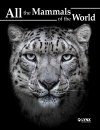
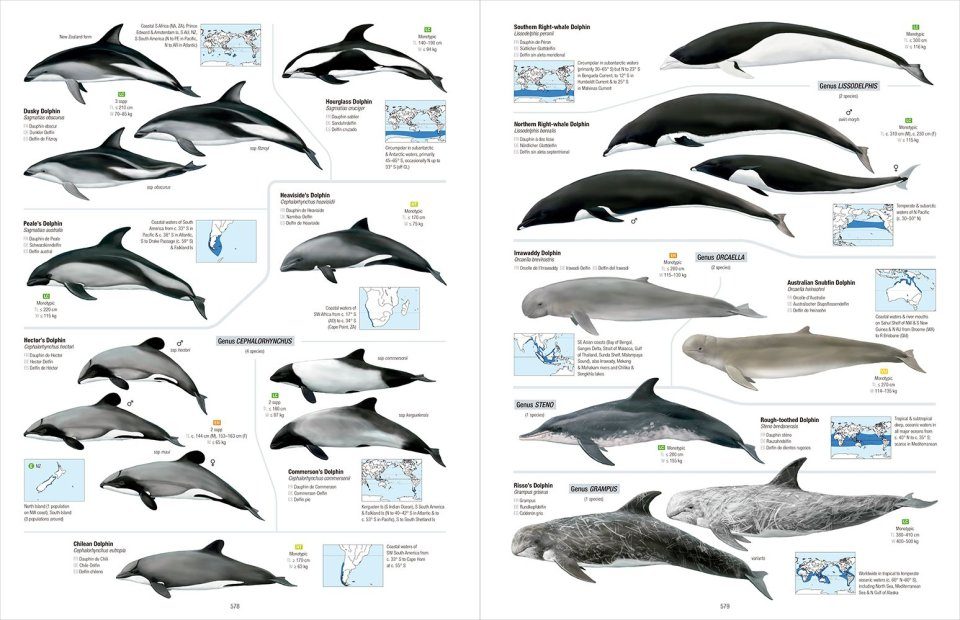
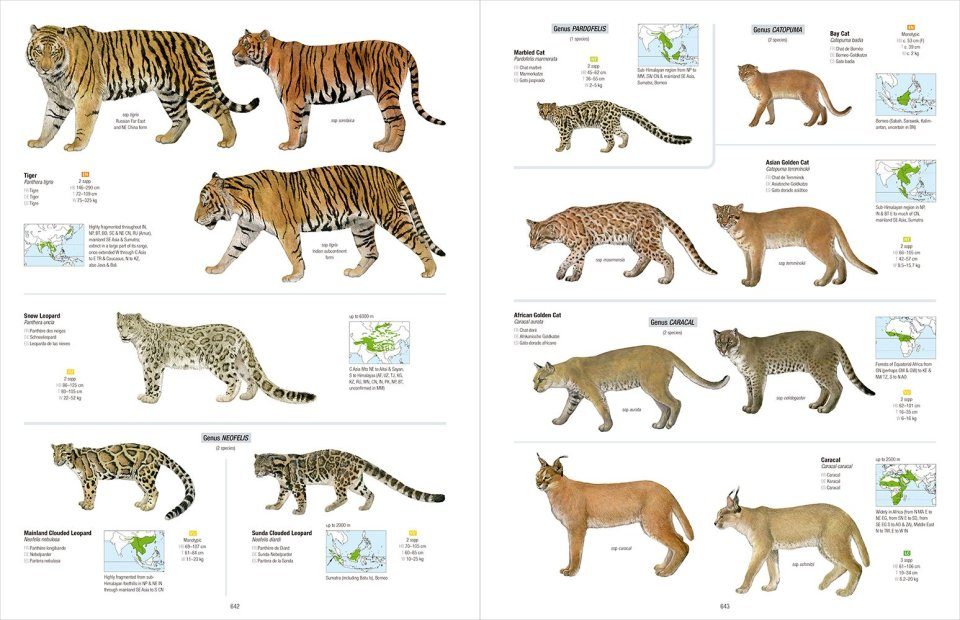
1) Monadjem, Ara (Foreword). All the Mammals of the World. 2023. Lynx Nature Books. Hardbound: 799 pages. Price: 89.00 Euros (about $99.05 U.S.).

PUBLISHER’S SUMMARY: For the first time ever, you can contemplate all the mammals of the World together in a single easy-to-use, fully illustrated volume. Created for a broad public, from wildlife enthusiasts to expert mammalogists, researchers, conservationists, and anyone interested in the spectacular diversity of mammals, this book has something for everyone.

- Presents 6581 species in total, including 6459 extant wild species, 19 domestic species and 103 extinct species.
- 7349 illustrations covering all species as well as sexual dimorphism, morphs and some distinctive subspecies.
- Relevant measurements for length and mass provided when available, as well additional data for groups where important.
- 6459 distribution maps, with written summary and notes on altitudinal ranges.
- All 2834 one-country endemic species marked.
- Species common names provided in English, French, German and Spanish, as well as scientific names.
- The IUCN Red List category of extinction risk is given for each species to highlight the importance of study and conservation.
- Taxonomic summary of the number of subspecies for each taxon.
- Appendix listing all taxonomic changes from the Illustrated Checklist of the Mammals of the World to the present, including 107 newly described species and 106 split species, and explaining the most important cases.
- More than 100 species known to have become extinct since the year 1500 are presented separately in their own appendix.
- Summary of recognized domestic species is provided in a separate appendix.
- A 37-page world atlas of colour reference maps, with relevant details of interest to mammal enthusiasts and professionals.
- The easiest and most enjoyable way to browse through all the mammals of the world.

     All the Mammals of the World has two clear antecedents, with which it shares many of its goals, especially that of spreading and promoting interest in mammals and wildlife worldwide: the Handbook of the Mammals of the World series in 9 volumes, the first printed work to include all the mammals of the world; and the Illustrated Checklist of the Mammals of the World in two volumes, which provides a taxonomic review of the previous publication. All the Mammals of the World in a single volume aims to bring the extraordinary richness and diversity of the world’s mammals closer to a wider audience.

RECOMMENDATION: This book is a MUST have for anyone with an interest in mammals! This title is a companion to All the Birds of the World but that title includes taxonomic details (not useful in mammals where 1 source is basically followed) and QR codes to eBird (unfortunately there is no online resource this vast for mammals yet!), while All the Mammals of the World takes advantage of that space for names in French, German and Spanish and more detailed measurements.This book can be ordered here.


2) Svensson, Lars. Birds of Europe: Third Edition. 2023. Princeton University Press. Paperback: 476 pages. Price: $35.00 U.S.

PUBLISHER’S SUMMARY: An expanded, comprehensively revised, and completely up-to-date new edition of the leading illustrated field guide to Europe’s birds.

     Since it was first published, Birds of Europe has established itself as the definitive illustrated field guide to the continent’s fascinating birdlife. Now in its third edition, this superb guide has been expanded and brought completely up to date with revised text, illustrations, and maps.

     More than 50 plates are either new or have been completely or partly repainted, and more pages, illustrations, and text have been added for several bird groups, including grouse, loons, raptors, terns, owls, swifts, woodpeckers, swallows, redstarts, tits, finches, and buntings. Newly discovered species are included, species that have expanded their range are now found in the main text, and species that have only recently been seen more than five times are gathered in an accidentals section.

     Combining unmatched illustrations, text, and maps in a single, portable, and easy-to-use volume,
Birds of Europe is the ultimate field guide to the continent’s birdlife―essential for every birdwatching trip and bookshelf.

  • Provides all the information needed to identify any species at any time of the year
  • Detailed text covers size, habitat, range, identification, and voice
  • Comprehensively illustrated with the best field guide artwork ever painted
  • Up-to-date distribution maps with information on breeding, wintering, and migrations
  • Covers all the species that are new to the continent or have been newly discovered
  • Features text and illustrations on facing pages for easy use in the field
  • Includes an introduction to each bird group that addresses major problems of observation and identification
 RECOMMENDATION: This book is a MUST have for anyone birding Europe!


3) Serjeantson, Dale. The Archaeology of Wild Birds in Britain and Ireland. 2023. Oxbow Books. Hardbound: 238 pages. Price: $95.00 U.S.
PUBLISHER’S SUMMARY: The Archaeology of Wild Birds in Britain and Ireland tells the story of human engagement with birds from the end of the last Ice Age to about AD 1650. It is based on archaeological bird remains integrated with ethnography and the history of birds and avian biology. In addition to their food value, the book examines birds in ritual activities and their capture and role in falconry and as companion animals. It is an essential guide for archaeologists and zooarchaeologists and will interest historians and naturalists concerned with the history and former distribution of birds.
RECOMMENDATION: This book is a must read for anyone with an interest in the ornithological history of Britain and Ireland.


4) Yoxon, Paul & Grace M.. Otters of the World. 2015. Whittles Publishing. Paperback: 154 pages. Price: $24.95 U.S.
PUBLISHER’S SUMMARY: This is an introduction to the magical world of otters with many wonderful photos and distribution maps for each species.

     The Asian small-clawed otters, often found in zoos, or the sea otter, well-known for lying on its back cracking open shells, may be familiar to many but there are many more fascinating species. Having worked for over 20 years on otter conservation the authors want to share their enthusiasm and passion for these animals.

     Each species is listed in the IUCN Red Data List and yet little attention is given to their predicament. The illegal wildlife trade in otters is huge—not just for furs and body parts but as pets. In some parts of the world otters are disappearing rapidly and unless urgent action is taken they will be gone forever. It is hoped the book will increase awareness and support for the work of the IOSF (International Otter Survival Fund) which is battling the threat of extinction to several species.
Otters stand at the top of the food chain on both land and water so they are an ideal indicator of a healthy environment. With greater awareness and support the IOSF will be able to do more on the world stage to conserve otters as exemplified by the Hairy-Nosed Otter which was rediscovered and helped having been thought extinct. This type of conservation work is vital because so often the plight of otters is overlooked for other high profile species such as tigers and elephants.

     Proceeds from the sale of this book will go to the IOSF.
RECOMMENDATION: This book is a readable overview of the World's otters.


5) Dickie, Gloria. Eight Bears: Mythic Past and Imperiled Future. 2023. W. W. Norton. Hardbound: 272 pages. Price: $30.00 U.S.
PUBLISHER’S SUMMARY: A global exploration of the eight remaining species of bears―and the dangers they face.

     Bears have always held a central place in our collective memory, from Indigenous folklore and Greek mythology to nineteenth-century fairytales and the modern toy shop. But as humans and bears come into ever-closer contact, our relationship nears a tipping point. Today, most of the eight remaining bear species are threatened with extinction. Some, such as the panda bear and the polar bear, are icons of the natural world; others, such as the spectacled bear and the sloth bear, are far less known.

     In Eight Bears, journalist Gloria Dickie embarks on a globe-trotting journey to explore each bear’s story, whisking readers from the cloud forests of the Andes to the ice floes of the Arctic; from the jungles of India to the backwoods of the Rocky Mountain West. She meets with key figures on the frontlines of modern conservation efforts―the head of a rescue center for sun and moon bears freed from bile farms, a biologist known as Papa Panda, who has led China’s panda-breeding efforts for almost four decades, a conservationist retraining a military radar system to detect and track polar bears near towns―to reveal the unparalleled challenges bears face as they contend with a rapidly changing climate and encroaching human populations.

     Weaving together ecology, history, mythology, and a captivating account of her travels and observations, Dickie offers a closer look at our volatile relationship with these magnificent mammals. Engrossing and deeply reported, Eight Bears delivers a clear warning for what we risk losing if we don’t learn to live alongside the animals that have shaped our cultures, geographies, and stories.

RECOMMENDATION: This book is a must read for anyone with an interest in bears.


6) Iselin, Josie. An Ocean Garden: The Secret Life of Seaweed. 2023. OSU Press. Paperback: 143 pages. Price: $24.95 U.S.

PUBLISHER’S SUMMARY: In this captivating book, artist and avid beachcomber Josie Iselin reveals the unexpected beauty of seaweed. Produced on a flatbed scanner, Iselin’s vibrant portraits of ocean flora reveal the exquisite color and extraordinary forms of more than two hundred specimens gathered from tidal pools along the California and Maine coasts. Her engaging text, which accompanies the images, blends personal observation and philosophical musings with scientific fact. Now available in paperback for the first time, this edition includes a new foreword and updated nomenclature. An Ocean Garden is a poetic and compelling tribute to the natural world and the wonder it evokes.  

RECOMMENDATION: The artwork in this book is worth the price of the book alone!


7) Brenner, Kelly. The Naturalist at Home: Projects for Discovering the Hidden World Around Us. 2023. Mountaineers Books. Paperback: 221 pages. Price: $19.95 U.S.

PUBLISHER’S SUMMARY: The Naturalist at Home emphasizes hands-on exploration with easy outdoor projects designed to help naturalists observe and study everything from invertebrates to mushrooms to mammals. Critically-acclaimed writer and naturalist Kelly Brenner developed these projects based on real techniques used by naturalists and scientists in the field. Easy to adapt, they are suitable for naturalists at all levels of experience and expertise.

      These projects bridge the gap between sophisticated science experiments and easy nature activities and between reading about nature and experiencing it in a real and tangible way. They are simple to carry out, and naturalists can repurpose items they have at home, find them at a thrift store, or purchase inexpensive tools and materials. Detailed descriptions of organisms, along with the author’s hand-drawn illustrations, help naturalists visualize what they may discover.


  • Features 20 projects with clear descriptions of materials and tools, plus a few bonus activities
  • Includes step-by-step instructions with charming, informative illustrations
  • Tips for troubleshooting and taking the project to the next level
RECOMMENDATION: I think children will like these projects!


8) Broberg, Gunnar. The Man Who Organized Nature: The Life of Linnaeus. 2023. Princeton University Press. Hardbound: 484 pages. Price: $39.95 U.S.

PUBLISHER’S SUMMARY: Carl Linnaeus (1707–1778), known as the father of modern biological taxonomy, formalized and popularized the system of binomial nomenclature used to classify plants and animals. Linnaeus himself classified thousands of species; the simple and immediately recognizable abbreviation “L” is used to mark classifications originally made by Linnaeus. This biography, by the leading authority on Linnaeus, offers a vivid portrait of Linnaeus’s life and work. Drawing on a wide range of previously unpublished sources―including diaries and personal correspondence―as well as new research, it presents revealing and original accounts of his family life, the political context in which he pursued his work, and his eccentric views on sexuality.

     The Man Who Organized Nature describes Linnaeus’s childhood in a landscape of striking natural beauty and how this influenced his later work. Linnaeus’s Lutheran pastor father, knowledgeable about plants and an enthusiastic gardener, helped foster an early interest in botany. The book examines the political connections that helped Linnaeus secure patronage for his work, and untangles his ideas about sexuality. These were not, as often assumed, an attempt to naturalize gender categories but more likely reflected the laissez-faire attitudes of the era. Linnaeus, like many other brilliant scientists, could be moody and egotistical; the book describes his human failings as well as his medical and scientific achievements. Written in an engaging and accessible style, The Man Who Organized Nature―one of the only biographies of Linnaeus to appear in English―provides new and fascinating insights into the life of one of history’s most consequential and enigmatic scientists.

RECOMMENDATION: This book is a must read for anyone with an interest in Carl Linnaeus.


9) McCarthy, James. Monkey Puzzle Man: Archibald Menzies, Plant Hunter. 2008. Whittles Publishing. Paperback: 223 pages. Price: $29.95 U.S.

PUBLISHER’S SUMMARY: Archibald Menzies was one of a legion of intrepid Scots plant collectors in the 18th and 19th centuries who roamed the world and, by a combination of toughness and knowledge, established the foundations of the botany of the British Empire. This is a fascinating tale of how he brought the monkey puzzle to England for the first time and provides an insight to international plant collecting in the 18th century.

     Based on his diaries, the author recounts how Menzies, whilst on a classic voyage of exploration in which he circumnavigated the world twice, is the only naval surgeon to be placed under arrest for insubordination - and all because his precious plants were washed away! He is also the only man to have pocketed his dessert at a foreign presidential banquet, which subsequently resulted in the introduction of one of the most curious trees to Britain's parks and estates.

     The author tells a tale of high adventure on land and sea in the latter part of the 18th century, from a surgeon's grisly work at the Battle of the Saints in the West Indies to the seductive allure of Tahitian maidens and plant collecting in freezing Alaska. Menzies was the first to ascend the fiery volcano of Mauna Loa in Hawaii, where the natives aptly described him as 'the red-faced man who gathered grass and cut off men's limbs'. An acclaimed naturalist, Menzies made major botanical discoveries during the epic journey of HMS Discovery under Captain George Vancouver along the north-west coast of America in the early 1790s, discovering many plants which now adorn British and continental gardens. He also described the California Condor and made important early anthropological observations on the native peoples of North America.

    In this highly readable book, the author recounts the story of how a young Scots gardener from humble origins became a distinguished plant pioneer who changed the face of gardens throughout Europe by his botanical discoveries.

RECOMMENDATION: This book is a must read for anyone with an interest in botanical history.


10) Wheeler, Quentin. Species, Science and Society: The Role of Systematic Biology. 2023. Routledge. Paperback: 246 pages. Price: $42.95 U.S.

PUBLISHER’S SUMMARY: This book presents an engaging and accessible examination of the role of systematic biology in species exploration and biodiversity conservation.

     Our planet and systematic biology are at a crossroads. Millions of species face an imminent threat of extinction, and, with knowledge of only a fraction of earth’s species we are unprepared to respond. Species, Science and Society explains what is at stake if we continue to ignore the traditional mission of systematics. Rejecting claims that it is too late to document earth’s species, that molecular evidence is sufficient and that comparative morphology and the grand traditions of systematics are outdated, this book makes a compelling argument for a taxonomic renaissance. The book challenges readers to rethink assumptions about systematics. Shattering myths and misconceptions and clarifying the role of systematics in confronting mass extinction, it hopes to inspire a new generation of systematists. Readers are given a deeply personal view of the mission, motivations and rewards of systematic biology. Written in narrative style with passion, wit and optimism, it is the first book to question the growing dominance of molecular data, defend descriptive taxonomy and propose a mission to discover, describe and classify all species. Our evolutionary heritage, the fate of society and the future of the planet depend on what we do next.

     This book will be of great interest to academics, researchers and professionals working in systematics, taxonomy and biodiversity conservation, as well as students with a basic background in biology.

RECOMMENDATION: This book is a must read for anyone with a serious interest in systematic biology.