Sunday, July 30, 2023

New Titles


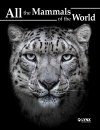
1) Monadjem, Ara (Foreword). All the Mammals of the World. 2023. Lynx Nature Books. Hardbound: 799 pages. Price: 89.00 Euros (about $99.05 U.S.).

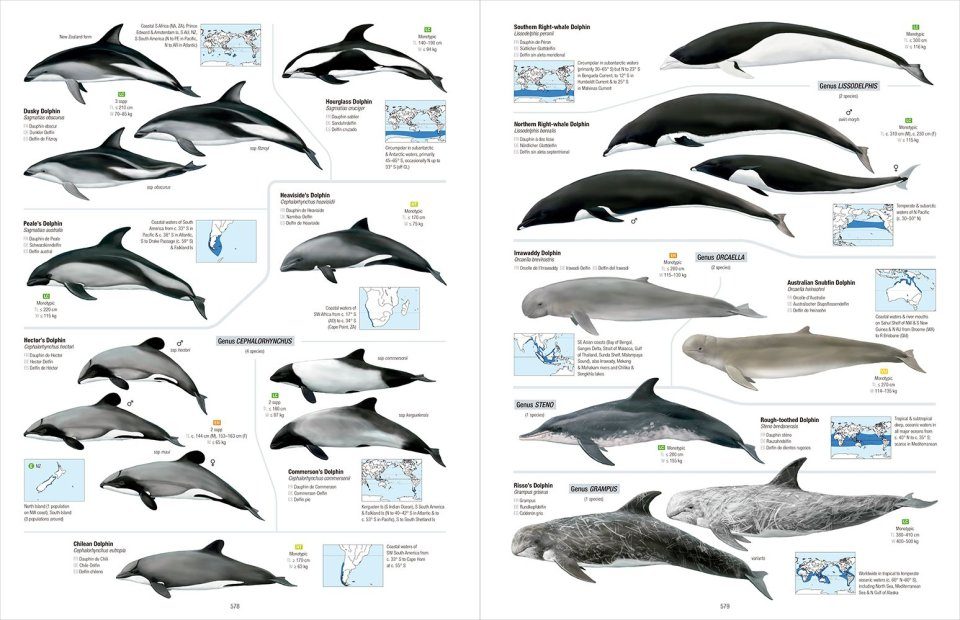
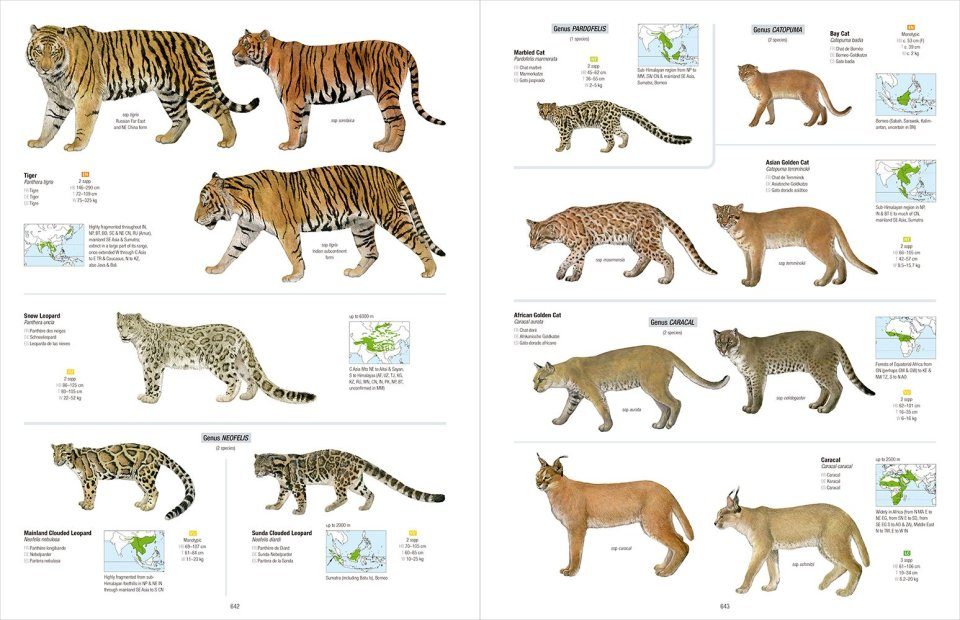
PUBLISHER’S SUMMARY: For the first time ever, you can contemplate all the mammals of the World together in a single easy-to-use, fully illustrated volume. Created for a broad public, from wildlife enthusiasts to expert mammalogists, researchers, conservationists, and anyone interested in the spectacular diversity of mammals, this book has something for everyone.

- Presents 6581 species in total, including 6459 extant wild species, 19 domestic species and 103 extinct species.
- 7349 illustrations covering all species as well as sexual dimorphism, morphs and some distinctive subspecies.
- Relevant measurements for length and mass provided when available, as well additional data for groups where important.
- 6459 distribution maps, with written summary and notes on altitudinal ranges.
- All 2834 one-country endemic species marked.
- Species common names provided in English, French, German and Spanish, as well as scientific names.
- The IUCN Red List category of extinction risk is given for each species to highlight the importance of study and conservation.
- Taxonomic summary of the number of subspecies for each taxon.
- Appendix listing all taxonomic changes from the Illustrated Checklist of the Mammals of the World to the present, including 107 newly described species and 106 split species, and explaining the most important cases.
- More than 100 species known to have become extinct since the year 1500 are presented separately in their own appendix.
- Summary of recognized domestic species is provided in a separate appendix.
- A 37-page world atlas of colour reference maps, with relevant details of interest to mammal enthusiasts and professionals.
- The easiest and most enjoyable way to browse through all the mammals of the world.

     All the Mammals of the World has two clear antecedents, with which it shares many of its goals, especially that of spreading and promoting interest in mammals and wildlife worldwide: the Handbook of the Mammals of the World series in 9 volumes, the first printed work to include all the mammals of the world; and the Illustrated Checklist of the Mammals of the World in two volumes, which provides a taxonomic review of the previous publication. All the Mammals of the World in a single volume aims to bring the extraordinary richness and diversity of the world’s mammals closer to a wider audience.

RECOMMENDATION: This book is a MUST have for anyone with an interest in mammals! This title is a companion to All the Birds of the World but that title includes taxonomic details (not useful in mammals where 1 source is basically followed) and QR codes to eBird (unfortunately there is no online resource this vast for mammals yet!), while All the Mammals of the World takes advantage of that space for names in French, German and Spanish and more detailed measurements.This book can be ordered here.


2) Svensson, Lars. Birds of Europe: Third Edition. 2023. Princeton University Press. Paperback: 476 pages. Price: $35.00 U.S.

PUBLISHER’S SUMMARY: An expanded, comprehensively revised, and completely up-to-date new edition of the leading illustrated field guide to Europe’s birds.

     Since it was first published, Birds of Europe has established itself as the definitive illustrated field guide to the continent’s fascinating birdlife. Now in its third edition, this superb guide has been expanded and brought completely up to date with revised text, illustrations, and maps.

     More than 50 plates are either new or have been completely or partly repainted, and more pages, illustrations, and text have been added for several bird groups, including grouse, loons, raptors, terns, owls, swifts, woodpeckers, swallows, redstarts, tits, finches, and buntings. Newly discovered species are included, species that have expanded their range are now found in the main text, and species that have only recently been seen more than five times are gathered in an accidentals section.

     Combining unmatched illustrations, text, and maps in a single, portable, and easy-to-use volume,
Birds of Europe is the ultimate field guide to the continent’s birdlife―essential for every birdwatching trip and bookshelf.

  • Provides all the information needed to identify any species at any time of the year
  • Detailed text covers size, habitat, range, identification, and voice
  • Comprehensively illustrated with the best field guide artwork ever painted
  • Up-to-date distribution maps with information on breeding, wintering, and migrations
  • Covers all the species that are new to the continent or have been newly discovered
  • Features text and illustrations on facing pages for easy use in the field
  • Includes an introduction to each bird group that addresses major problems of observation and identification
 RECOMMENDATION: This book is a MUST have for anyone birding Europe!


3) Serjeantson, Dale. The Archaeology of Wild Birds in Britain and Ireland. 2023. Oxbow Books. Hardbound: 238 pages. Price: $95.00 U.S.
PUBLISHER’S SUMMARY: The Archaeology of Wild Birds in Britain and Ireland tells the story of human engagement with birds from the end of the last Ice Age to about AD 1650. It is based on archaeological bird remains integrated with ethnography and the history of birds and avian biology. In addition to their food value, the book examines birds in ritual activities and their capture and role in falconry and as companion animals. It is an essential guide for archaeologists and zooarchaeologists and will interest historians and naturalists concerned with the history and former distribution of birds.
RECOMMENDATION: This book is a must read for anyone with an interest in the ornithological history of Britain and Ireland.


4) Yoxon, Paul & Grace M.. Otters of the World. 2015. Whittles Publishing. Paperback: 154 pages. Price: $24.95 U.S.
PUBLISHER’S SUMMARY: This is an introduction to the magical world of otters with many wonderful photos and distribution maps for each species.

     The Asian small-clawed otters, often found in zoos, or the sea otter, well-known for lying on its back cracking open shells, may be familiar to many but there are many more fascinating species. Having worked for over 20 years on otter conservation the authors want to share their enthusiasm and passion for these animals.

     Each species is listed in the IUCN Red Data List and yet little attention is given to their predicament. The illegal wildlife trade in otters is huge—not just for furs and body parts but as pets. In some parts of the world otters are disappearing rapidly and unless urgent action is taken they will be gone forever. It is hoped the book will increase awareness and support for the work of the IOSF (International Otter Survival Fund) which is battling the threat of extinction to several species.
Otters stand at the top of the food chain on both land and water so they are an ideal indicator of a healthy environment. With greater awareness and support the IOSF will be able to do more on the world stage to conserve otters as exemplified by the Hairy-Nosed Otter which was rediscovered and helped having been thought extinct. This type of conservation work is vital because so often the plight of otters is overlooked for other high profile species such as tigers and elephants.

     Proceeds from the sale of this book will go to the IOSF.
RECOMMENDATION: This book is a readable overview of the World's otters.


5) Dickie, Gloria. Eight Bears: Mythic Past and Imperiled Future. 2023. W. W. Norton. Hardbound: 272 pages. Price: $30.00 U.S.
PUBLISHER’S SUMMARY: A global exploration of the eight remaining species of bears―and the dangers they face.

     Bears have always held a central place in our collective memory, from Indigenous folklore and Greek mythology to nineteenth-century fairytales and the modern toy shop. But as humans and bears come into ever-closer contact, our relationship nears a tipping point. Today, most of the eight remaining bear species are threatened with extinction. Some, such as the panda bear and the polar bear, are icons of the natural world; others, such as the spectacled bear and the sloth bear, are far less known.

     In Eight Bears, journalist Gloria Dickie embarks on a globe-trotting journey to explore each bear’s story, whisking readers from the cloud forests of the Andes to the ice floes of the Arctic; from the jungles of India to the backwoods of the Rocky Mountain West. She meets with key figures on the frontlines of modern conservation efforts―the head of a rescue center for sun and moon bears freed from bile farms, a biologist known as Papa Panda, who has led China’s panda-breeding efforts for almost four decades, a conservationist retraining a military radar system to detect and track polar bears near towns―to reveal the unparalleled challenges bears face as they contend with a rapidly changing climate and encroaching human populations.

     Weaving together ecology, history, mythology, and a captivating account of her travels and observations, Dickie offers a closer look at our volatile relationship with these magnificent mammals. Engrossing and deeply reported, Eight Bears delivers a clear warning for what we risk losing if we don’t learn to live alongside the animals that have shaped our cultures, geographies, and stories.

RECOMMENDATION: This book is a must read for anyone with an interest in bears.


6) Iselin, Josie. An Ocean Garden: The Secret Life of Seaweed. 2023. OSU Press. Paperback: 143 pages. Price: $24.95 U.S.

PUBLISHER’S SUMMARY: In this captivating book, artist and avid beachcomber Josie Iselin reveals the unexpected beauty of seaweed. Produced on a flatbed scanner, Iselin’s vibrant portraits of ocean flora reveal the exquisite color and extraordinary forms of more than two hundred specimens gathered from tidal pools along the California and Maine coasts. Her engaging text, which accompanies the images, blends personal observation and philosophical musings with scientific fact. Now available in paperback for the first time, this edition includes a new foreword and updated nomenclature. An Ocean Garden is a poetic and compelling tribute to the natural world and the wonder it evokes.  

RECOMMENDATION: The artwork in this book is worth the price of the book alone!


7) Brenner, Kelly. The Naturalist at Home: Projects for Discovering the Hidden World Around Us. 2023. Mountaineers Books. Paperback: 221 pages. Price: $19.95 U.S.

PUBLISHER’S SUMMARY: The Naturalist at Home emphasizes hands-on exploration with easy outdoor projects designed to help naturalists observe and study everything from invertebrates to mushrooms to mammals. Critically-acclaimed writer and naturalist Kelly Brenner developed these projects based on real techniques used by naturalists and scientists in the field. Easy to adapt, they are suitable for naturalists at all levels of experience and expertise.

      These projects bridge the gap between sophisticated science experiments and easy nature activities and between reading about nature and experiencing it in a real and tangible way. They are simple to carry out, and naturalists can repurpose items they have at home, find them at a thrift store, or purchase inexpensive tools and materials. Detailed descriptions of organisms, along with the author’s hand-drawn illustrations, help naturalists visualize what they may discover.


  • Features 20 projects with clear descriptions of materials and tools, plus a few bonus activities
  • Includes step-by-step instructions with charming, informative illustrations
  • Tips for troubleshooting and taking the project to the next level
RECOMMENDATION: I think children will like these projects!


8) Broberg, Gunnar. The Man Who Organized Nature: The Life of Linnaeus. 2023. Princeton University Press. Hardbound: 484 pages. Price: $39.95 U.S.

PUBLISHER’S SUMMARY: Carl Linnaeus (1707–1778), known as the father of modern biological taxonomy, formalized and popularized the system of binomial nomenclature used to classify plants and animals. Linnaeus himself classified thousands of species; the simple and immediately recognizable abbreviation “L” is used to mark classifications originally made by Linnaeus. This biography, by the leading authority on Linnaeus, offers a vivid portrait of Linnaeus’s life and work. Drawing on a wide range of previously unpublished sources―including diaries and personal correspondence―as well as new research, it presents revealing and original accounts of his family life, the political context in which he pursued his work, and his eccentric views on sexuality.

     The Man Who Organized Nature describes Linnaeus’s childhood in a landscape of striking natural beauty and how this influenced his later work. Linnaeus’s Lutheran pastor father, knowledgeable about plants and an enthusiastic gardener, helped foster an early interest in botany. The book examines the political connections that helped Linnaeus secure patronage for his work, and untangles his ideas about sexuality. These were not, as often assumed, an attempt to naturalize gender categories but more likely reflected the laissez-faire attitudes of the era. Linnaeus, like many other brilliant scientists, could be moody and egotistical; the book describes his human failings as well as his medical and scientific achievements. Written in an engaging and accessible style, The Man Who Organized Nature―one of the only biographies of Linnaeus to appear in English―provides new and fascinating insights into the life of one of history’s most consequential and enigmatic scientists.

RECOMMENDATION: This book is a must read for anyone with an interest in Carl Linnaeus.


9) McCarthy, James. Monkey Puzzle Man: Archibald Menzies, Plant Hunter. 2008. Whittles Publishing. Paperback: 223 pages. Price: $29.95 U.S.

PUBLISHER’S SUMMARY: Archibald Menzies was one of a legion of intrepid Scots plant collectors in the 18th and 19th centuries who roamed the world and, by a combination of toughness and knowledge, established the foundations of the botany of the British Empire. This is a fascinating tale of how he brought the monkey puzzle to England for the first time and provides an insight to international plant collecting in the 18th century.

     Based on his diaries, the author recounts how Menzies, whilst on a classic voyage of exploration in which he circumnavigated the world twice, is the only naval surgeon to be placed under arrest for insubordination - and all because his precious plants were washed away! He is also the only man to have pocketed his dessert at a foreign presidential banquet, which subsequently resulted in the introduction of one of the most curious trees to Britain's parks and estates.

     The author tells a tale of high adventure on land and sea in the latter part of the 18th century, from a surgeon's grisly work at the Battle of the Saints in the West Indies to the seductive allure of Tahitian maidens and plant collecting in freezing Alaska. Menzies was the first to ascend the fiery volcano of Mauna Loa in Hawaii, where the natives aptly described him as 'the red-faced man who gathered grass and cut off men's limbs'. An acclaimed naturalist, Menzies made major botanical discoveries during the epic journey of HMS Discovery under Captain George Vancouver along the north-west coast of America in the early 1790s, discovering many plants which now adorn British and continental gardens. He also described the California Condor and made important early anthropological observations on the native peoples of North America.

    In this highly readable book, the author recounts the story of how a young Scots gardener from humble origins became a distinguished plant pioneer who changed the face of gardens throughout Europe by his botanical discoveries.

RECOMMENDATION: This book is a must read for anyone with an interest in botanical history.


10) Wheeler, Quentin. Species, Science and Society: The Role of Systematic Biology. 2023. Routledge. Paperback: 246 pages. Price: $42.95 U.S.

PUBLISHER’S SUMMARY: This book presents an engaging and accessible examination of the role of systematic biology in species exploration and biodiversity conservation.

     Our planet and systematic biology are at a crossroads. Millions of species face an imminent threat of extinction, and, with knowledge of only a fraction of earth’s species we are unprepared to respond. Species, Science and Society explains what is at stake if we continue to ignore the traditional mission of systematics. Rejecting claims that it is too late to document earth’s species, that molecular evidence is sufficient and that comparative morphology and the grand traditions of systematics are outdated, this book makes a compelling argument for a taxonomic renaissance. The book challenges readers to rethink assumptions about systematics. Shattering myths and misconceptions and clarifying the role of systematics in confronting mass extinction, it hopes to inspire a new generation of systematists. Readers are given a deeply personal view of the mission, motivations and rewards of systematic biology. Written in narrative style with passion, wit and optimism, it is the first book to question the growing dominance of molecular data, defend descriptive taxonomy and propose a mission to discover, describe and classify all species. Our evolutionary heritage, the fate of society and the future of the planet depend on what we do next.

     This book will be of great interest to academics, researchers and professionals working in systematics, taxonomy and biodiversity conservation, as well as students with a basic background in biology.

RECOMMENDATION: This book is a must read for anyone with a serious interest in systematic biology.


Sunday, June 25, 2023

New Titles


1) Gorman, Gerard. The Green Woodpecker: The Natural and Cultural History of Picus viridis. 2023. Pelagic Publishing. Paperback: 212 pages. Price: $36.00 U.S.

PUBLISHER’S SUMMARY: This book describes the natural and cultural history of an iconic and unusual woodpecker – a species that nests in tree cavities but which forages mostly on the ground. The Green Woodpecker, known in folk English as the Yaffle, is afforded comprehensive coverage in this work, with information on its origins, taxonomy, anatomy, appearance, moult, calls, distribution, conservation status, habitats, movements, breeding, diet and relationships with other wildlife and humans all presented. The text is richly illustrated throughout with quality photographs as well as sound spectrograms. Many eye-opening observations of Green Woodpecker behaviour are detailed. This all-encompassing and engaging account has been written for a wide audience, whether professional ornithologist, citizen scientist, amateur birder, woodpecker aficionado and simply someone who wishes to learn more about this curious and remarkable bird.

RECOMMENDATION: This book is a must have for anyone with an interest in this species or with woodpeckers in general.  


2) Ryan, Peter. Guide to Seabirds of Southern Africa (2nd edition). 2023. Struik Nature. Paperback: 200 pages. Price: $17.00 U.S.

PUBLISHER’S SUMMARY: Guide to Seabirds of Southern Africa is the only book focusing exclusively on all the seabird species that occur around the southern African coastline and adjacent Southern Ocean. Authoritative, fully illustrated and detailed, this new edition has been fully updated and expanded to reflect the latest data and taxonomy. A section on flying fish and squid has been added, revealing some of the amazing marine creatures that birders may encounter in the waters around southern Africa.

     Written by the region’s foremost seabird specialist, the species accounts include informative text, multiple full-color photographs and distribution maps. A fascinating introduction covers seabird origins, havens, feeding, breeding and conservation, as well as how best to watch and photograph these enigmatic birds.

RECOMMENDATION: This book is a must have for anyone who goes pelagic birding off Southern Africa!


3) Forshaw, Joseph. Quail, Buttonquail and Plains-wanderer in Australia and New Zealand. 2023. CSIRO Publishing. Hardbound: 183 pages. Price: $117.99 U.S.

PUBLISHER’S SUMMARY: Although not closely related, quail, buttonquail and the Plains-wanderer have much in common. Quail, Buttonquail and Plains-wanderer in Australia and New Zealand examines 14 species of these small, secretive ground-dwelling birds, including Old World and New World quail, the endangered Buff-breasted Buttonquail, the elusive Plains-wanderer and the extinct New Zealand Quail.

     Joseph Forshaw presents a comprehensive review of recent studies for these often hard to observe birds. Detailed species descriptions include key features, habitat, status, diet and breeding, along with information on eggs, calls, and distribution. Each species is fully illustrated with exquisite color identification plates by renowned wildlife artist Frank Knight. This is an essential reference for anyone fascinated by these elusive birds.

Features:
  • A comprehensive account of six species of quail, seven species of buttonquail and the quail-like Plains-wanderer in Australia and New Zealand.
  • Includes the extinct New Zealand Quail.
  • Features detailed species descriptions, including habitats, breeding, subspecies, distribution, historical notes, eggs, diet and status.
  • All species are illustrated in fine color plates by Frank Knight, one of Australia’s leading wildlife artists.
RECOMMENDATION: This book is a must have for anyone with a serious interest in the birds of the region!


4) Lavery, Tyrone and Tim Flannery. Mammals of the South-West Pacific. 2023. CRC Press. Hardbound: 345 pages. Price: $140.00 U.S.

PUBLISHER’S SUMMARY: Islands are special because they promote unique forms of life, and large proportions of the species they hold are found nowhere else on Earth. The mammals of the South-west Pacific are no exception, with many distributed only across single islands or archipelagos.

     Mammals of the South-west Pacific details the natural history for more than 180 species of marsupials, bats and rodents from 24 Pacific nations and territories. Species profiles are accompanied by distribution maps, illustrations and photographs – many being the first images ever captured for the species. By combining available knowledge with unpublished data collected over years of field work, Mammals of the South-west Pacific forms a definitive guide to the mammals from this region. 

RECOMMENDATION: This book is a must have for anyone with a serious interest in the mammals of the region!


5) Dodd Jr., C. Kenneth. Frogs of the United States and Canada (second edition). 2023. Johns Hopkins University Press. Hardbound: 954 pages. Price: $199.00 U.S.

PUBLISHER’S SUMMARY: The most thorough, updated guide to frogs and toads in the United States and Canada available.

     A stunning diversity of frog species can be found from coastal swamps to lofty mountain peaks, and from the Florida Keys to the Arctic Ocean. They live in subtropical lowlands, grassland prairies, deserts, and alpine-tundra habitats. Some species have restricted habitat requirements, whereas others occur contiguously from the arid plains or humid southeastern forests to the high tundra.

     In this new edition of Frogs of the United States and Canada, C. Kenneth Dodd Jr. tours the reader through the marvelous world of North American frogs. Covering 114 native and introduced species from all US states and Canadian provinces, this comprehensive reference on the biology, behavior, and conservation of the Order Anura includes detailed and updated information on:

• past and present distribution
• life history and demography
• reproduction and diet
• landscape ecology and evolution
• diseases, parasites, and threats from toxic substances
• conservation and management

     Hundreds of occurrence maps, line drawings, and new color photographs of frogs and their habitats enhance the text. The most thorough treatment of the life histories, distribution, and status of North American frogs ever produced, Frogs of the United States and Canada has been the go-to reference for naturalists, scientists, and resource managers in their efforts to understand and conserve frogs, their habitats, and biodiversity for over a decade. Based on a meticulously updated examination of more than 8,000 references current through 2021, this second edition ensures Dodd's master work will remain an unparalleled resource for years to come.

RECOMMENDATION: This book is a must have for anyone with a serious interest in the frogs of the region!


6) Godwin, Sean and Martin Krkosek. Pacific Salmon Field Guide. 2022. Lone Pine Publishing. Paperback: 160 pages. Price: $

PUBLISHER’S SUMMARY: Pacific salmon are of immense cultural, ecological and economic importance to the west coast of North America. They are the most commonly seen fish on the western side of North America but identifying among the seven species is difficult for most of their life stages. Two salmon researchers have worked extensively in the field with this iconic group of fish and have developed the first comprehensive field identification guide for Pacific salmon in a functional format.         

     This guide presents information and identifying characteristics for the seven Pacific salmon species—sockeye, coho, Chinook, pink, chum, steelhead and coastal cutthroat—across five life stages, with strong emphasis on detailed and intuitive illustrations. This guide is an identification resource that includes natural history, life stage descriptions and conservation status of Pacific salmon and how to observe these fish in the wild. The identification portions are organized into five life stages: fry, smolt, post smolt, ocean adult, and spawner. The many scientific illustrations for each species are drawn from real specimens representative of their species and life stage. Joseph Tomelleri, who drew all the brilliant illustrations in this book, painstakingly measured every part of each fish, counting every fin ray and row of scales while layering colour upon colour. In addition, dozens of photos show these fish in incredible detail.

RECOMMENDATION: This book is a must have for anyone with an interest in Pacific salmon!


7) Archer, Michael et al.. Prehistoric Australasia: Visions of Evolution and Extinction. 2023. CSIRO Publishing. Hardbound: 258 pages. Price: $U.S.

PUBLISHER’S SUMMARY: For most of the past 300 million years, the world’s continents were interlinked as the supercontinents Pangaea and then Gondwana. Around 50 million years ago, Australia tore itself free from Antarctica to become the huge, splendidly isolated island it is today. Over time, its creatures began to evolve in ways not seen anywhere else on Earth, with tree-climbing crocodiles, gigantic venomous lizards, walking omnivorous bats and flesh-eating kangaroos roaming the continent.

      Prehistoric Australasia: Visions of Evolution and Extinction presents some of the most extraordinary creatures the world has ever seen – all unique to Australia, New Guinea, New Zealand and their surrounding islands.

     Over 100 meticulously painted panoramas by palaeoartist Peter Schouten are accompanied by descriptions of the unique environments and features of these animals, written by four of Australia’s foremost palaeontologists. This book explores the nature and timing of extinction events in the Southern Hemisphere, considers whether some of these losses might be able to be reversed, and how we can use the fossil record to help save today’s critically endangered species. Through stunning artwork and fascinating text,
Prehistoric Australasia brings this globally unique transformation over time to glorious, colorful life.

Features:
  • Offers fascinating glimpses into the prehistoric past of Australia, New Zealand and New Guinea.
  • More than 100 paintings showcasing the changing biotas of Australasia over the last 3.6 billion years.
  • Reveals the unique features of prehistoric animals and the environments where they lived.
RECOMMENDATION: Peter Schouten's artwork highlights this book! This title is a must have for anyone with an interest in the prehistory of the region!


8) Nabavizadeh, Ali and David B. Weishampel. An Illustrated Guide to Dinosaur Feeding Biology. 2023. Johns Hopkins University Press. Hardbound: 353 pages. Price: $59.95 U.S.

PUBLISHER’S SUMMARY: This beautifully illustrated exploration of the diversity, anatomy, and evolution of dinosaur feeding adaptations is the first and only in-depth look at this crucial aspect of paleoecology. 

     In An Illustrated Guide to Dinosaur Feeding Biology, experts Ali Nabavizadeh and David B. Weishampel bring dinosaurs to life on the page by exploring and illustrating their feeding adaptations. Whether dinosaurs were carnivorous, herbivorous, or omnivorous, their evolution produced a multitude of specialized adaptations that helped shape their ecologies. Dinosaur skulls show a variety of bone and joint specializations ideal for withstanding stresses and strains induced by high bite forces with strong jaw musculature. The bladed, steak-knife dentition of many carnivorous dinosaurs was well-suited for slicing meat and crushing bones, while the leaf-shaped, sometimes tightly packed dentition of many herbivorous dinosaurs was ideal for grinding up a variety of plant material.

     The first book of its kind, An Illustrated Guide to Dinosaur Feeding Biology is a synthesis of over a century of dinosaur feeding biology research, from the earliest hypotheses in the 1800s to today's studies using advanced techniques. Intended for both researchers and dinosaur enthusiasts alike, this book discusses functional morphological studies highlighting comparative anatomy, tooth wear, muscle reconstruction, and biomechanical analysis using modeling techniques like finite element analysis and multibody dynamics analysis. In addition to the feeding apparatus, Nabavizadeh and Weishampel explore postcranial adaptations and discuss the evolution of dinosaurs and their paleoecology more broadly. Integrating these various factors improves our understanding of dinosaurs as the living beings they were in their ecosystems millions of years ago and ultimately expands our knowledge and perspective of today's ecosystems by framing them in a broader evolutionary context.

     RECOMMENDATION: This book is a must have for anyone with a serious interest in dinosaur biology!