Sunday, October 30, 2022

New Titles


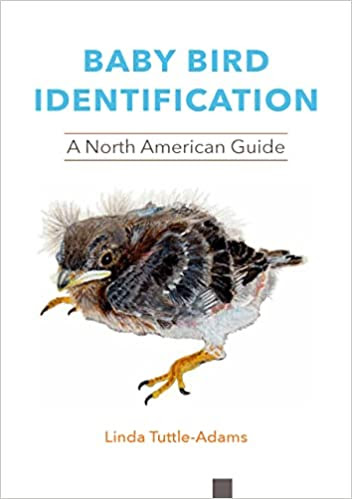
1) Tuttle-Adams, Linda. Baby Bird Identification: A North American Guide. 2022. Comstock/Cornell University Press. Paperback: 401 pages. Price: $39.95 U.S.

PUBLISHER’S SUMMARY: Baby Bird Identification is a comprehensive illustrated guide for distinguishing hundreds of North American bird species in their early stages of life. From the just hatched to the fledgling, Linda Tuttle-Adams walks readers through the process of identifying baby birds that they may encounter in the wild―a first step to ensuring proper care and rehabilitation.

     Successful rehabilitation of birds found in the wild requires species-specific attention. But the identification of a baby bird, whether altricial or precocial, may seem overwhelming at first, even to a trained ornithologist. Tuttle-Adams lays out an approachable and systematic method for discerning a baby bird's identity, offering descriptions of telling anatomical and environmental features as well as details of a bird's day-to-day growth.

      With over four hundred original watercolor paintings and an illustrated glossary, Baby Bird Identification is an invaluable resource for wildlife rehabilitators, those who find baby birds in their yards or recreational places, and anyone who enjoys watching or studying birds in the wild.

RECOMMENDATION: A MUST have for all bird rehabilitators in the continental United States and Canada!  


2) Walther, Michael and Julian P. Hume. Extinct Birds of Hawaii (Second Edition). 2022. Mutual Publishing. Hardbound: 260 pages. Price: $23.95 U.S.

PUBLISHER’S SUMMARY: Extinct Birds of Hawai'i captures the vanishing world of unique bird species that has slipped away in the Islands mostly due to human frivolity and unconcern. Richly illustrated, including paintings by Julian P. Hume (many painted specifically for this volume), it enables us to enjoy vicariously avian life unique to Hawai'i that exists no longer. Extinct Birds of Hawai'i also sends a powerful message: Although Hawai'i is well-known for its unique scenic beauty and its fascinating native flora, fauna, bird and marine life, it is also called the extinction capital of the world. The Islands' seventy-seven bird species and sub-species extinctions account for approximately fifteen percent of global bird extinctions during the last seven-hundred years. On some islands over eighty percent of the original land bird species are now extinct. 

     This new edition includes many new paintings, photographs, charts, and updates on all of the recently extinct species. The extinction of an entire family, the Mohoidae, receives expanded coverage and new artwork.

     With the many agents of extinction still operating in the Islands' forests, Hawai'i's remaining native land birds are at a high risk of being lost forever. Many birdwatchers, nature lovers, and eco-tourists are unaware of the tremendous loss of species that has occurred in this remote archipelago. Extinct Birds of Hawai'i shows the bird life that has been lost and calls attention to the urgent need for preservation action.
RECOMMENDATION: The page count has increased from 238 to 260. Julian P. Hume's artwork highlights this book! This title is a must have for those with an interest in extinct birds!
 

3) Millet, Lydia. Dinosaurs: A Novel. 2022. W. W. Norton. Hardbound: 230 pages. Price: $26.95 U.S.
PUBLISHER’S SUMMARY: Over twelve novels and two collections Lydia Millet has emerged as a major American novelist. Hailed as "a writer without limits" (Karen Russell) and "a stone-cold genius" (Jenny Offill), Millet makes fiction that vividly evokes the ties between people and other animals and the crisis of extinction.

     Her exquisite new novel is the story of a man named Gil who walks from New York to Arizona to recover from a failed love. After he arrives, new neighbors move into the glass-walled house next door and his life begins to mesh with theirs. In this warmly textured, drily funny, and philosophical account of Gil’s unexpected devotion to the family, Millet explores the uncanny territory where the self ends and community begins―what one person can do in a world beset by emergencies.

      Dinosaurs is both sharp-edged and tender, an emotionally moving, intellectually resonant novel that asks: In the shadow of existential threat, where does hope live?

RECOMMENDATION: If you enjoyed the author's other books, you will enjoy this one!


4) Contreras, Alan, Vjera Thompson, and Nolan Clements (editors). A History of Oregon Ornithology: From Territorial Days to the Rise of Birding. 2022. Oregon State University Press. Paperback: 284 pages. Price: $34.95 U.S.

PUBLISHER’S SUMMARY: The study of birds was, in its early years, often driven by passionate amateurs in a localized context. A History of Oregon Ornithology takes readers  from the Lewis and Clark expedition, through the professionalization of the field, and to the mid-twentieth century, focusing on how birding and related amateur field observation grew outside the realms of academia and conservation agencies.
 
     Editors Alan Contreras, Vjera Thompson, and Nolan Clements have assembled chapters exploring the differences and interplay between the amateur and professional study of birds, along with discussions of early birding societies, notable observers, and ornithological studies. The book includes chapters on such significant ornithologists as Charles Bendire, William L. Finley, Ira Gabrielson, Stanley Jewett, and David B. Marshall. It also notes the sometimes-overlooked contributions of women to our expanding knowledge of western birds. Special attention is paid to the development of seabird observation, the impact of the Internet, and the rise of digital resources for bird observers.
 
     Intended for readers interested in the history of Oregon, scientific explorations in the West, and the origins of modern birding and field ornithology, 
A History of Oregon Ornithology offers a detailed and entertaining account of the study of birds in the Pacific Northwest.

RECOMMENDATION: A must have for those with an interest in Oregon's ornithological history!


5) Goodison, Natalie Jayne. Introducing the Medieval Swan. 2022. University of Wales Press. Paperback: 197 pages. Price: $15.00 U.S.

PUBLISHER’S SUMMARY: Swans possess a striking beauty, and they are imbued with a sense of regal mystery that makes them some of the most fascinating of wild creatures. Introducing the Medieval Swan traces those characteristics to their roots in the medieval era. Opening with a study of the natural history of the swan as understood in the period, the book then moves to literary motifs that feature swans transforming into humans, particularly the legend of the Knight of the Swan. The third chapter examines the place of the swan as an icon of the Lancasters, and the book then explores the swan’s place as a delicacy at extravagant feasts. Finally, we learn how the characteristics the medieval era associated with swans developed over the centuries to the present.

RECOMMENDATION: A must have for those with an interest in medieval history and/or swans.


6) Flores, Dan. Wild New World: The Epic Story of Animals and People in America. 2022. W. W. Norton & Company. Hardbound: 448 pages. Price: $30.00 U.S.

PUBLISHER’S SUMMARY: In 1908, near Folsom, New Mexico, a cowboy discovered the remains of a herd of extinct giant bison. By examining flint points embedded in the bones, archeologists later determined that a band of humans had killed and butchered the animals 12,450 years ago. This discovery vastly expanded America’s known human history but also revealed the long-standing danger Homo sapiens presented to the continent’s evolutionary richness.

     Distinguished author Dan Flores’s ambitious history chronicles the epoch in which humans and animals have coexisted in the “wild new world” of North America―a place shaped both by its own grand evolutionary forces and by momentous arrivals from Asia, Africa, and Europe. With portraits of iconic creatures such as mammoths, horses, wolves, and bison, Flores describes the evolution and historical ecology of North America like never before.

      The arrival of humans precipitated an extraordinary disruption of this teeming environment. Flores treats humans not as a species apart but as a new animal entering two continents that had never seen our likes before. He shows how our long past as carnivorous hunters helped us settle America, initially establishing a coast-to-coast culture that lasted longer than the present United States. But humanity’s success had devastating consequences for other creatures. In telling this epic story, Flores traces the origins of today’s “Sixth Extinction” to the spread of humans around the world; tracks the story of a hundred centuries of Native America; explains how Old World ideologies precipitated 400 years of market-driven slaughter that devastated so many ancient American species; and explores the decline and miraculous recovery of species in recent decades.

      In thrilling narrative style, informed by genomic science, evolutionary biology, and environmental history, Flores celebrates the astonishing bestiary that arose on our continent and introduces the complex human cultures and individuals who hastened its eradication, studied America’s animals, and moved heaven and earth to rescue them. Eons in scope and continental in scale, Wild New World is a sweeping yet intimate Big History of the animal-human story in America.

RECOMMENDATION: If you enjoyed the author's other books, you will enjoy this one!


7) Thorogood, Chris. Chasing Plants: Journeys with a Botanist through Rainforests, Swamps, and Mountains. 2022. Kew/University of Chicago Press. Hardbound: 288 pages. Price: $27.50 U.S.

PUBLISHER’S SUMMARY: From an acclaimed botanist and artist, a thrilling and beautifully illustrated expedition around the globe in search of the world’s most extraordinary plants.

     After making a strange discovery on a childhood trip to Ikea—a stand of sap-sucking, leafless broomrapes, stealing nutrients from their neighbors’ roots—Chris Thorogood dreamed of becoming a botanist and would stop at nothing to feed his growing addiction to plants. In his hair-raising adventures across Europe, Africa, the Middle East, and Asia, Thorogood treads a death-defying path over cliffs, up erupting volcanoes, through typhoons, and out into the very heart of the world’s vast, green wilderness. Along the way, he encounters pitcher plants, irises, and orchids more heart-piercingly beautiful than could ever be imagined.
 
       But with Thorogood as our guide in
Chasing Plants, we not only imagine: we see. An internationally acclaimed botanical illustrator, Thorogood conjures his adventures spent seed-collecting and conserving plants around the world back to life in his electric paintings, which feature throughout the book. They bring plants out of the shadows, challenging us to see their intrigue and their character, and helping us to understand why plant species must be protected. To join Thorogood in his wild adventures is to be cast under his green spell: readers will never think of plants the same way again.
RECOMMENDATION: The author's artwork is worth the price of the book alone!
 

8) Gruesser, John Cullen (editor). Animals in the American Classics: How Natural History Inspired Great Fiction. 2022. Texas A&M University Press. Hardbound: 298 pages. Price: $38.00 U.S.

PUBLISHER’S SUMMARY: As defined by conservation biologist Thomas Fleishner, natural history is “a practice of intentional, focused receptivity to the more-than-human world . . . one of the oldest continuous human traditions.” Seldom is this idea so clearly reflected as in classic works of American fiction of the nineteenth and twentieth centuries.

     John Cullen Gruesser’s edited volume Animals in the American Classics: How Natural History Inspired Great Fiction features essays by prominent literary scholars that showcase natural history and the multifaceted role of animals in well-known works of fiction, from Washington Irving in the early nineteenth century to Cormac McCarthy in the late twentieth century, and including short stories and novels by Edgar Allan Poe, Herman Melville, Mark Twain, Zora Neale Hurston, William Faulkner, Ernest Hemingway, Jack London, John Steinbeck, and Harper Lee.

     As an introduction to or a new way of thinking about some of the best-known and most beloved literary texts this nation has produced, Animals in the American Classics considers fundamental questions of ethics and animal intelligence as well as similarities among racism, ageism, misogyny, and speciesism.  

      With their awareness of Poe’s “more-than-casual knowledge of natural science,” Mark Twain’s proto–animal rights sensibilities, and Hurston’s training as an anthropologist, the contributors show that by drawing attention to and thinking like an animal, fiction tests the limits of humanity.

RECOMMENDATION: A must read for anyone with an interest in American literature.    


9) Kowal, Mary Robinette. The Spare Man. 2022. Tor Trade. Paperback: 357 pages. Price: $19.99 U.S.

PUBLISHER’S SUMMARY: Hugo, Locus, and Nebula-Award winner Mary Robinette Kowal blends her no-nonsense approach to life in space with her talent for creating glittering high-society in this stylish SF mystery, The Spare Man.


Thursday, September 29, 2022

New Titles


1) Birkhead, Tim. Birds and Us: A 12,000-Year History from Cave Art to Conservation. 2022. Princeton University Press. Hardbound: 441 pages. Price: $35.00 U.S.

PUBLISHER’S SUMMARY: Since the dawn of human history, birds have stirred our imagination, inspiring and challenging our ideas about science, faith, art, and philosophy. We have worshipped birds as gods, hunted them for sustenance, adorned ourselves with their feathers, studied their wings to engineer flight, and, more recently, attempted to protect them. In Birds and Us, award-winning writer and ornithologist Tim Birkhead takes us on a dazzling epic journey through our mutual history with birds, from the ibises mummified and deified by Ancient Egyptians to the Renaissance fascination with woodpecker anatomy―and from the Victorian obsession with egg collecting to today’s fight to save endangered species and restore their habitats.

     Spanning continents and millennia,
Birds and Us chronicles the beginnings of a written history of birds in ancient Greece and Rome, the obsession with falconry in the Middle Ages, and the development of ornithological science. Moving to the twentieth century, the book tells the story of the emergence of birdwatching and the field study of birds, and how they triggered an extraordinary flowering of knowledge and empathy for birds, eventually leading to today’s massive worldwide interest in birds―and the realization of the urgent need to save them.

     Weaving in stories from Birkhead’s life as scientist, including far-flung expeditions to wondrous Neolithic caves in Spain and the bustling guillemot (murre) colonies of the Faroe Islands, this rich and fascinating book is an unforgettable account of how birds have shaped us, and how we have shaped them.

RECOMMENDATION: If you liked the author's other books, you will want to read this one!


2) Benn, Bryan. Short-eared Owls: An Extensive Study of Short-eared Owls in Britain. 2021. Self-published. Hardbound: 431 pages. Price: GBP 34.99 (about $37.75 U.S.).

PUBLISHER’S SUMMARY: Author Bryan Benn was, in February 2011 a non-birder when, with a friend, he visited the Isle of Sheppey and saw a Short-eared Owl for the first time; immediately being captivated by it. With no detailed books available, Bryan started a still continuing journey to find out as much as possible about these enigmatic birds, and documents all of that in the book he has now published.

     And what a journey it has been, so far covering 68 locations from Kent to the Outer Hebrides, and from Land’s End to the Orkney mainland. With extensive observations revealing that these owls were mainly nocturnally active; had a wide, and at times, very noisy range of calls; and, when needed, could hunt successfully in wind and rain when most other creatures had taken cover. All this makes it an owl that, when studied in great detail, defies a number of the labels often attached to Short-eareds.

      After chapters setting the scene with a description of the owls; their locations and movements; and their habitat, the book moves on to cover hearing, vision and voice. The book is richly illustrated throughout, with photos supporting the detailed text, and wherever possible, showing the owls the text relates to. That feature of the book becomes more obvious in the chapters covering food and hunting, and then breeding. That latter chapter is the longest in the book and includes data (rather than consigning it to appendices) with relevant photos alongside it.

      A chapter on the daily life of Short-eared Owls describes their incredible flying skills and then covers several years of extensive observations of a large over-winter roost in Kent. A further chapter covers the dangers and early demise these owls face at times, but also touches, more positively, on conservation efforts being made for the species. Finally, as a celebration of the wide coverage of Short-eared Owls in Britain in the book, a mainly photographic chapter features some of the locations visited during the ten-year study. That chapter, and the book, concludes with descriptions and photographic coverage of some of many very close encounters enjoyed with the owls.

RECOMMENDATION: A copy of this book can be ordered through NHBS here. The author's photography highlights this book! It's a must have for anyone with an interest in Short-eared Owls!


3) Rennie, Frank. The Corncrake: An Ecology of an Enigma. 2022. Whittles Publishing. Paperback: 181 pages. Price: $24.95 U.S.

PUBLISHER’S SUMMARY: Changes in farmland management throughout the twentieth century, including agricultural intensification and increasing mechanisation, have resulted in the loss of habitat for many species. The Corncrake is one such species that has faced multiple challenges to its survival. Although it was once a common bird throughout northern Europe, the breeding areas of Corncrakes have been steadily reduced to a fraction of what they once were, and in many areas their continuation as a regularly breeding bird is in serious doubt.

     In addition, the behaviour of the Corncrake, nesting under the cover of tall grass and undertaking annual long-distance migrations, means that for most of the last hundred years, its detailed ecology has remained mysterious and little understood. Although there have been millions of words written about the Corncrake in scientific papers, until now there has been no full-length book that attempts to capture all the aspects of its ecology, and to present this information to non-specialists. As a result, until very recently, many important facts about its lifestyle and behaviour have not been widely known, even among ornithologists.

      Although scarcely seen in its natural habitat, the Corncrake is well-known in many rural areas due to its characteristic (and persistent) night-time calling, but new discoveries with the aid of acoustic science have proved surprising, and may offer new ways of improving the location, identification, and management options to protect and enable the population of this iconic species to recover, even to thrive in our countryside. A new appreciation of the requirements of this species and the ways in which our sensitive management of the whole landscape, both in its potential breeding areas across Europe and Asia and in the seasonal quarters in regions of Africa, offer new hope for the future of this fascinating bird. 

 RECOMMENDATION: A MUST have for anyone with an interest in this species!


4) Olsen, Penny. Feather and Brush: A History of Australian Bird Art (Second Edition). 2022. CSIRO Publishing. Hardbound: 338 pages. Price: $51.99 U.S.

PUBLISHER’S SUMMARY: Feather and Brush traces the history of bird art in Australia – from the simple engravings illustrating accounts of the earliest European voyages of discovery to the diversity of artwork available today. It explores the early European approach, in which naval draughtsmen, officers, convicts, settlers, naturalists, artists and scientists alike contributed both to the art and the science of ornithology, through to a wealth of contemporary artists who feature birds in their works.

     This book contains more than 400 images, representing the work of 158 artists; some well-known, others published for the first time. The illustrations have been selected for their interest, whether ornithological, historical or artistic. They range from classical to quirky, decorative to functional, monumental to intimate. Together they demonstrate the rich history of Australian bird art, as it evolved in Europe and Australia, and continues today, along with the trends and technologies of the times.

     This second edition includes new and revised chapters, and features about 200 new artworks, including some by Indigenous artists
 

RECOMMENDATION: A MUST have for anyone with an interest in bird art!


5) Lucas, Spencer G.. Dinosaurs: The Textbook (7th edition). 2022. Columbia University Press. Paperback: 368 pages. Price: $90.00 U.S.

PUBLISHER’S SUMMARY: Geared toward a broad variety of students, Dinosaurs: The Textbook offers a concise and lucid presentation of the core biological and geological concepts of dinosaur science. Revised throughout to reflect recent fossil discoveries and the current scientific consensus, this seventh edition details the evolution, phylogeny, and classification of various dinosaur species while modeling the best approach for navigating new and existing research.

     Spencer G. Lucas takes readers through the major taxonomic groups, including theropods, sauropodomorphs, ornithopods, ceratopsians, pachycephalosaurs, stegosaurs, and ankylosaurs. He also examines the behavior and extinction of the dinosaurs, their biological relationship to birds, and their representation (or misrepresentation) in art, literature, film, and other forms of popular culture.

     This seventh edition of the leading text for introductory courses on dinosaurs incorporates comprehensive updates based on the latest research. Lucas highlights how dinosaur science is rapidly evolving, exploring how new discoveries, methods, and ideas are expanding the frontiers of knowledge. The book features cutting-edge and scientifically rigorous illustrations by leading paleoartists. It also includes extensive and reader-friendly end-of-chapter summary tools, review questions, a detailed glossary, a dinosaur dictionary, and a comprehensive index.
RECOMMENDATION: Best for undergraduate level courses.


6) Schlossman, Marc. Extinction: Our Fragile Relationship with Life on Earth. 2022. Ammonite Press. Hardbound: 224. Price: $45.00 U.S.

PUBLISHER’S SUMMARY: Extinction explores endangered and extinct species and the factors threatening them through a behind-the-scenes lens on one of the most important sets of natural history collections in the world, at the Field Museum in Chicago.

     Schlossman combines unique photographs of specimens from the Field Museum in Chicago with informative and insightful text about the species themselves, reasons for decline, and the conservation efforts in place to prevent further extinction.

      The specimens revealed in this book are not on public display and the only way to see many of them is through these photographs, the result of ten years cataloguing key species from the museum’s zoology and botany collections. The images lead the reader to the species’ stories, promoting a greater understanding of mankind’s stewardship of life on Earth at a critical time in history.

      Extinction illustrates the crucial importance of museum collections for conservation, education and research.

      The book has been designed to have pages with black backgrounds for extinct species and white backgrounds for species nearing extinction. A yellow flag highlights conservation successes, which are interspersed throughout. The conservation success stories highlight the positive work that is happening and the potential there is to prevent the extinction of these and other species.
RECOMMENDATION: A must have for anyone with an interest in endangered and/or extinct species.
 

7) van Dooren, Thom. A World in a Shell: Snail Stories for a Time of Extinctions. 2022. The MIT Press. Hardbound: 273 pages. Price: $29.95 U.S.

PUBLISHER’S SUMMARY: In this time of extinctions, the humble snail rarely gets a mention. And yet snails are disappearing faster than any other species. In A World in a Shell, Thom van Dooren offers a collection of snail stories from Hawai‘i—once home to more than 750 species of land snails, almost two-thirds of which are now gone. Following snail trails through forests, laboratories, museums, and even a military training facility, and meeting with scientists and Native Hawaiians, van Dooren explores ongoing processes of ecological and cultural loss as they are woven through with possibilities for hope, care, mourning, and resilience.
 
     Van Dooren recounts the fascinating history of snail decline in the Hawaiian Islands: from deforestation for agriculture, timber, and more, through the nineteenth century shell collecting mania of missionary settlers, and on to the contemporary impacts of introduced predators. Along the way he asks how both snail loss and conservation efforts have been tangled up with larger processes of colonization, militarization, and globalization. These snail stories provide a potent window into ongoing global process of environmental and cultural change, including the largely unnoticed disappearance of countless snails, insects, and other less charismatic species. Ultimately, van Dooren seeks to cultivate a sense of wonder and appreciation for our damaged planet, revealing the world of possibilities and relationships that lies coiled within a snail’s shell.

RECOMMENDATION: A must have for anyone with an interest in Hawaiian land snails!


8) Hall, Dave. The Naturalist's Companion: A Field Guide to Observing and Understanding Wildlife. 2022. Mountaineers Books. Paperback: 204 pages. Price: $19.95 U.S.

PUBLISHER’S SUMMARY: The Naturalist’s Companion fills an important void in outdoor education by teaching readers how to become more learned and patient observers and, ultimately, more proficient naturalists.

     Through exhaustive time in the field, author Dave Hall has developed a comprehensive understanding of nature awareness and refined his skills to enhance any time spent outdoors and to foster closer, more respectful encounters with wildlife. Through personal anecdotes and detailed explanations, Hall teaches the principles and ethics of stealth walking, calling, tracking, interpreting basic animal behavior, and much more. Each chapter concludes with a list of exercises, prompting readers to study and put these skills into use, while introductory sections discuss gear, safety, ethics, and thoughtful engagement.

     
The Naturalist’s Companion will deepen readers’ connection with the outdoors and help them to establish and maintain consistent, intimate, and informed wildlife observations.

RECOMMENDATION: Best for beginning naturalists.